• Mon - Fri 8.00 - 17.30 & Sat 9.00-14.00

Category Archives: Uncategorized

Categories Uncategorized

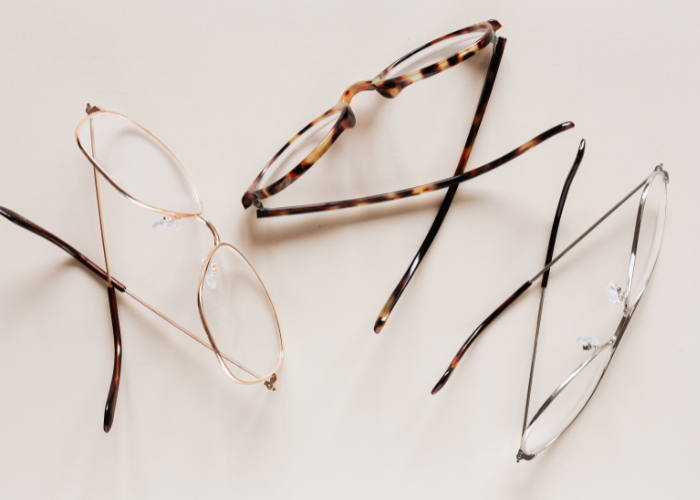
Latest Trends in Eyewear for 2026

hether you’re looking for a total image overhaul or just a subtle refresh, 2026 is officially the year where “boring” eyewear goes to die. We are seeing a fascinating split in the industry: one side is leaning into high-tech, bold futurism, while the other is perfecting the art of “quiet luxury.”

If you’re ready to trade in your old frames for something current, here are the top eyewear trends for 2026 that you’ll be seeing everywhere from the office to the airport.


1. The “Bayonetta” Evolution (Slim & Elongated)

If 2025 was about the return of the 90s, 2026 is about refining it. The “Bayonetta” look—named after the sleek, narrow glasses worn by the iconic video game character—is the “it” silhouette of the year.

  • The Look: Narrow, rectangular, or slightly winged cat-eye frames.
  • Why it works: It adds a sharp, intellectual edge to your face without the bulk of oversized frames.

2. Geometric Architecturals

Standard rounds and squares are taking a backseat to more “structured” shapes. We’re talking hexagons, octagons, and frames with sharp, beveled edges.

  • The Trend: Frames that look like they were designed by an architect.
  • Best For: Adding definition to rounder face shapes. These are statement pieces that scream “creative professional.”

3. “Quiet Luxury” Neutrals

The “New Neutrals” are officially replacing stark black frames. In 2026, the palette is all about calm, earthy tones that brighten the complexion rather than contrasting it.

  • Key Colors:
    • Soft Sage & Dusty Rose: Gentle pops of color that act as neutrals.
    • Warm Sand & Champagne: Perfect for a “barely there” sophisticated look.
    • Transformative Teal: Voted a standout color for the year, offering a grounded yet modern vibe.

4. Electric Tortoiseshell

Tortoiseshell is a timeless classic, but the 2026 version has a literal twist. Instead of the traditional brown and amber, we are seeing “Electric Tortoise.”

  • What’s New: Traditional patterns infused with flecks of emerald green, cobalt blue, or even vibrant pink.
  • The Vibe: It’s a playful way to wear a classic pattern while still looking fashion-forward.

5. Performance AI & Smart Eyewear

We’ve moved past the “clunky tech” phase. Smart glasses in 2026 actually look like… well, glasses.

  • The Tech: Many top brands (like the Ray-Ban Meta collaboration) are now offering frames that integrate AI assistants, cameras, and audio while maintaining a slim, stylish profile.
  • The Feature: Look for “Performance AI” lenses that adjust to digital eye strain in real-time.

6. Sustainable Bio-Acetates

Eco-conscious is no longer a niche category; it’s the standard. Consumers are demanding—and brands are delivering—frames made from bio-acetates (plant-based materials) and recycled surgical steel.

  • The Benefit: These frames are often lighter, more flexible, and hypoallergenic, making them as comfortable as they are ethical.

Which Trend Is Right For You?

Choosing a pair of glasses is deeply personal. While trends provide the inspiration, the best pair is always the one that balances your face shape and fits your lifestyle.

Quick Tip: If you have a round face, lean into the Geometric trend. If you have an angular or square face, try the Refined Oversized or Soft Neutral rounds to balance your features.

Ready to Upgrade?

Don’t wait for your current pair to break. 2026 is the year to treat your eyewear as your most important accessory. After all, it’s the first thing people see when they look at you!
Categories Uncategorized

Why blue light protection still matters (and when it doesn’t)

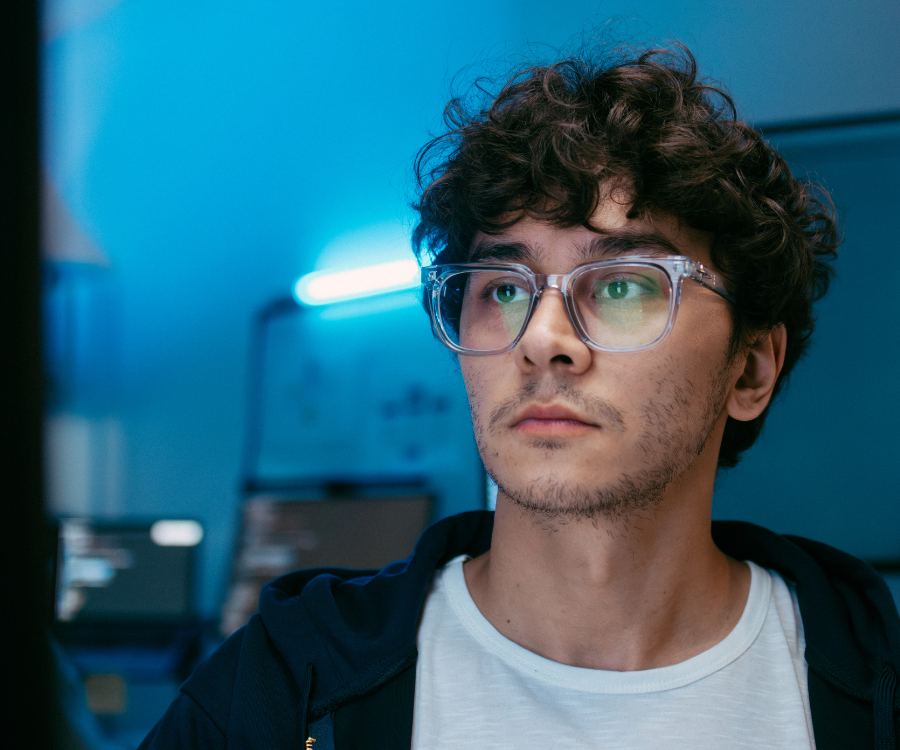
The Blue Light Debate: Why Protection Still Matters (And When It Doesn’t)

We’ve all been there: it’s 11:00 PM, you’re three chapters deep into a digital thriller or spiraling down a social media rabbit hole, and your eyes start to feel like they’ve been rubbed with sandpaper.

For years, the solution seemed simple: buy blue light glasses. But as the science has evolved, so has the nuance. Is blue light the ultimate digital villain, or have we been over-protecting ourselves from a natural part of life?

Let’s break down the reality of blue light protection in 2026—so you can stop straining and start scrolling smarter.


What Exactly Is Blue Light?

Blue light is a high-energy visible (HEV) light. While we associate it with iPhones and MacBooks, its biggest source is actually the sun.

In nature, blue light is a “good guy.” It tells our brains to wake up, boosts alertness, and helps regulate our circadian rhythm. The problem isn’t the light itself; it’s the timing and the intensity of our modern exposure.


Why Protection Still Matters

Despite some “myth-busting” headlines, blue light protection isn’t just marketing fluff. Here is where it actually makes a difference:

  • Sleep Hygiene is King: Exposure to blue light in the evening suppresses melatonin, the hormone that tells your body it’s time to sleep. If you’re using screens within two hours of bed, protection (or turning the screen off) is essential for quality REM cycle.
  • Reduced Visual Fatigue: While blue light doesn’t technically “damage” your retina in standard doses, HEV light scatters more easily than other colors. This “visual noise” reduces contrast, forcing your eyes to work harder to focus.
  • The “Cumulative” Factor: We are the first generation to spend 8–12 hours a day staring at artificial light sources from inches away. Protection acts as a preventative measure against long-term eye strain.

When Protection Doesn’t Matter (The Reality Check)

It’s easy to get caught up in the hype, but you don’t need to live behind yellow-tinted lenses 24/7. Here is when you can skip the filters:

  1. During the Daytime: If you’re working in a bright, sunlit room, your body actually benefits from some blue light to stay focused and productive.
  2. Color-Critical Work: If you’re a graphic designer, video editor, or photographer, blue light filters will distort your color accuracy. In these cases, it’s better to rely on the 20-20-20 Rule (every 20 minutes, look 20 feet away for 20 seconds).
  3. To Prevent “Blindness”: There is currently no peer-reviewed evidence that digital blue light causes permanent vision loss or macular degeneration. If a brand tells you that you’ll go blind without their glasses, they’re selling fear, not science.

How to Protect Yourself (Without Buying New Gear)

Before you drop $100 on designer computer glasses, try these high-impact, low-cost shifts:

  • Software Filters: Most modern devices have “Night Shift” (iOS/macOS) or “Night Light” (Windows) built-in. These warm up the screen temperature automatically at sunset.
  • Matte Screen Protectors: These reduce glare, which is often a bigger culprit for headaches than blue light itself.
  • Check Your Lighting: Using a bright screen in a pitch-black room creates intense contrast strain. Use a warm desk lamp to balance the ambient light.

The Bottom Line

Blue light protection still matters because our digital habits haven’t slowed down. However, it isn’t a magic shield. The best protection is a combination of smart tech settings, mindful evening use, and giving your eyes the most important thing they need: a break.

Pro Tip: If you find yourself getting headaches at the end of the day, it might not be the light—it might be that you aren’t blinking enough! We blink 50% less when looking at screens. Try to make “conscious blinking” a part of your workflow.

Categories Uncategorized

Lazy Eye (Amblyopia): Early Detection and Treatment

Vision Matters: Why Early Action is Everything for “Lazy Eye”

When it comes to our children’s health, we often track every milestone—from their first steps to their first words. But there is one critical development happening behind the scenes that is often overlooked: the connection between the eyes and the brain.

Amblyopia, commonly known as Lazy Eye, is a condition that affects roughly 3 out of every 100 children. While the name sounds a bit casual, the condition is anything but. If left untreated, it can lead to permanent vision loss. The good news? It is highly treatable when caught early.


What Exactly is Amblyopia?

Contrary to popular belief, a “lazy eye” isn’t always an eye that wanders or looks crossed (that is actually called strabismus).

Amblyopia occurs when the brain prefers one eye over the other. Because the brain isn’t receiving a clear image from the “weaker” eye, it eventually begins to ignore the signals sent from it. Over time, the neurological pathways between that eye and the brain fail to develop properly.

Common Causes:

  • Refractive Errors: One eye has significantly worse nearsightedness, farsightedness, or astigmatism than the other.
  • Strabismus: The eyes are misaligned, causing the brain to shut off one eye to avoid double vision.
  • Deprivation: Something physical blocks light from entering the eye, such as a childhood cataract.

The “Silent” Symptoms: What to Look For

The trickiest part about Amblyopia is that children often don’t know they are seeing the world incorrectly. To them, blurry vision in one eye is “normal.” Since the “strong” eye does all the heavy lifting, the child may seem to see perfectly fine.

As a parent, watch for these subtle red flags:

  1. Squinting or shutting one eye when trying to focus.
  2. Tilting the head to one side to see better.
  3. Poor depth perception (clumsiness, tripping, or trouble catching a ball).
  4. An eye that wanders inward or outward.

The Golden Window: Why Early Detection Wins

The “plasticity” of a child’s brain is a superpower. In early childhood, the visual system is still “wiring” itself.

  • Under age 7: Treatment is most effective because the brain is still highly adaptable.
  • Ages 7 to 17: Treatment can still work, but it often takes longer and requires more intensive effort.
  • Adulthood: While some improvements can be made, treating amblyopia becomes significantly more difficult once the visual pathways are fully formed.

The Bottom Line: Don’t wait for a school screening. A comprehensive eye exam by an optometrist is recommended by 6 months of age, again at 3 years, and before entering kindergarten.


How We Treat Lazy Eye Today

Modern optometry has moved far beyond just “wearing a patch.” While patching is still a gold standard, we use a multi-faceted approach to retrain the brain.

1. Corrective Lenses

Often, simply providing the brain with a clear, focused image through glasses or contacts is the first step in “waking up” the lazy eye.

2. Occlusion Therapy (Patching)

By placing an adhesive patch over the stronger eye for a few hours a day, we force the brain to use the weaker eye. This strengthens the neural connections.

3. Atropine Drops

In some cases, specialized eye drops are used to temporarily blur the vision in the strong eye, functioning like a “liquid patch.”

4. Vision Therapy

Think of this as physical therapy for the eyes. We use specialized exercises, digital games, and lenses to teach the eyes to work together as a team.


Final Thoughts: A Clear Future Starts Now

Amblyopia isn’t just about “blurry vision”—it’s about how a child interacts with the world, their safety, and their future career opportunities.

If your child hasn’t had a comprehensive eye exam recently, now is the perfect time to schedule one. Early detection is the greatest gift you can give your child’s sight.

Categories Uncategorized

Why More Kids Are Wearing Glasses Than Ever Before

The 2026 Vision Shift: Why More Kids Are Wearing Glasses Than Ever Before

If you’ve noticed more toddlers in trendy frames or middle-schoolers rocking thick lenses lately, you aren’t imagining things. As of 2026, we are officially living through what experts call the “Myopia Epidemic.” Recent global data shows that nearly 1 in 3 children and adolescents are now nearsighted (myopic). In some urban hubs, that number climbs as high as 80%. But why is this happening now, and what does it mean for the next generation?


1. The “Near-Work” Explosion

The primary culprit isn’t just “screens”—it’s distance. Whether it’s a tablet, a smartphone, or a traditional paperback book, children are spending record amounts of time focusing on things just inches from their faces.

In 2026, digital learning is no longer a “supplement”; it is the standard. When a child’s eye focuses on close-up objects for hours, the eyeball actually begins to lengthen. This elongation makes it difficult for the eye to focus on distant objects, leading to a permanent need for glasses.

2. The Great Indoors

It turns out that natural sunlight is a secret weapon for eye health. Research has confirmed that vitamin D and dopamine—released when eyes are exposed to bright, outdoor light—help regulate eye growth.

With more kids living in urban environments and leisure time shifting toward indoor gaming and streaming, children are getting significantly less “lux” (light intensity) than previous generations. Experts now recommend at least 90 to 120 minutes of outdoor play daily to help “freeze” eye growth in its tracks.

3. The “Post-Pandemic” Lag

We are now seeing the long-term visual consequences of the early 2020s. The children who spent their developmental years behind screens during lockdowns are now hitting their teens with much higher prescriptions than their parents had at the same age. This “compounding effect” has accelerated the demand for pediatric eye care to record levels in 2026.

4. Better Detection (The Good News!)

It’s not all bad news. One reason we see more glasses is that we’re getting better at finding the problem. Modern school screenings and AI-assisted eye exams are catching vision issues earlier than ever. We’ve moved past the “can you see the chalkboard?” test to sophisticated imaging that can predict myopia before a child even struggles to read.


Beyond Just Glasses: What’s New in 2026?

If your child does need vision correction, the options in 2026 go far beyond standard plastic lenses. We now have “Myopia Management” tools designed to slow down the progression of nearsightedness, rather than just correcting it:

  • DIMS & HAL Lenses: Specialized glasses (like Stellest or MiYOSMART) that use “defocus” zones to tell the brain to stop stretching the eyeball.
  • Orthokeratology (Ortho-K): Hard contacts worn only at night that reshape the cornea while the child sleeps, providing clear vision all day without glasses.
  • Low-Dose Atropine: Specially formulated eye drops that have become a mainstream way to slow down eye growth in younger children.

The “20-20-20” Rule

If you want to protect your child’s vision today, eye doctors in 2026 still swear by one simple habit: The 20-20-20 Rule.

Every 20 minutes, have your child look at something 20 feet away for at least 20 seconds.

This simple break allows the eye muscles to relax and prevents them from getting “locked” into a near-focus position.

The Bottom Line: While the world is becoming more “near-sighted,” our approach to eye health is becoming more “far-sighted.” With early intervention and a bit more sunshine, we can ensure the next generation sees the world clearly.