
• Mon - Fri 8.00 - 17.30 & Sat 9.00-14.00

Yearly Archives: 2025

Categories Uncategorized

When Eye Pain Is an Emergency

When Eye Pain is an Emergency: 7 Warning Signs You Can’t Ignore

Eye pain is common, and often, it’s nothing more than a mild irritation from a late night, allergies, or a piece of dust. A scratchy, burning, or mildly aching eye can usually be managed at home or with a visit to your eye doctor.

However, there are critical times when eye pain signals a medical emergency. Delaying treatment in these situations could lead to permanent vision loss or serious health complications.

Knowing the difference between an irritation and an emergency is vital for protecting your sight. Here are the 7 key warning signs that your painful eye needs immediate, emergency medical attention.


1. Sudden, Severe Eye Pain with Nausea or Vomiting

This combination of symptoms is a major red flag that should send you straight to the emergency room.

  • The Cause: This is the classic presentation of Acute Angle-Closure Glaucoma—a condition where the pressure inside the eye (intraocular pressure) suddenly and rapidly spikes. This pressure buildup can quickly and permanently damage the optic nerve.
  • Key Symptoms: Severe eye pain, headache, blurred vision, and feeling nauseous or vomiting. You might also notice halos around lights.
  • Action: Call emergency services immediately. This is a sight-threatening emergency.

2. Sudden Loss or Change in Vision

Any abrupt, unexplained change to your vision, with or without pain, is a sign of a serious problem.

  • The Cause: This can point to conditions like retinal detachment, optic nerve inflammation (optic neuritis), or even a stroke.
  • Key Symptoms: Sudden vision loss (partial or total), a dark curtain or shadow across your field of view, or a new, sudden onset of double vision (diplopia).
  • Action: Seek immediate emergency care. Time is crucial for saving your sight.

3. Eye Trauma with Foreign Object or Penetration

If the injury involves an object that has hit or, worse, penetrated your eye, it’s a critical emergency.

  • The Cause: Physical trauma, such as a high-speed projectile (metal, wood, grit) or a sharp object.
  • Key Symptoms: Extreme eye discomfort, bleeding in or around the eye, visible foreign object, or an inability to open the eye.
  • Action: Do NOT rub, rinse, or try to remove the object. Cover the eye with a loose shield (like a paper cup taped over the eye) and go to the emergency room immediately to prevent further damage.

4. Chemical Exposure or Burns

Splashing any type of chemical—from household cleaners to industrial agents—in the eye is an immediate emergency.

  • The Cause: Alkali (e.g., drain cleaner, ammonia) and acid-based chemicals can cause rapid, severe damage to the cornea and surrounding tissues.
  • Key Symptoms: Burning eyes, intense irritation, redness, pain, and sometimes blurred vision.
  • Action: Flush the eye immediately with copious amounts of clean, lukewarm water for at least 15 to 20 minutes. Keep flushing while calling for emergency medical help or en route to the ER.

5. Seeing an Excessive Increase in Floaters and Flashes

While it’s normal to see occasional “floaters” (small specks or squiggles), a sudden dramatic increase is a serious warning sign.

  • The Cause: This often signals a retinal tear or detachment, where the light-sensitive tissue at the back of the eye pulls away from its position.
  • Key Symptoms: A sudden flood of floaters or new, sudden flashes of light, sometimes described as streaks or lightning.
  • Action: Call your eye doctor or go to the emergency room right away. Immediate treatment is essential to reattach the retina and prevent blindness.

6. Eye Pain with Bulging or Inability to Move the Eye

When pain is accompanied by swelling that causes the eye to push forward or restricts its movement, it can indicate a deep and serious infection.

  • The Cause: Conditions like Orbital Cellulitis (a severe infection behind the eye) can quickly progress and affect vision and even the brain.
  • Key Symptoms: Deep, throbbing eye pain, fever, noticeable swelling around the eye, and difficulty or inability to move the eye in all directions.
  • Action: This is a life-threatening infection. You must seek emergency medical care immediately.

7. Severe Pain and Redness for Contact Lens Wearers

If you wear contact lenses and develop intense pain, redness, and light sensitivity, do not try to “tough it out.”

  • The Cause: This symptom cluster is often associated with a corneal ulcer or bacterial keratitis (a severe infection of the cornea), which can quickly scar the cornea and cause permanent vision loss.
  • Key Symptoms: Severe, persistent eye pain, significant redness, blurred vision, and extreme sensitivity to light (photophobia).
  • Action: Remove your lenses, discard them, and seek immediate consultation with an eye care professional or go to the emergency room.

Key Takeaway for Eye Health

While most minor eye discomfort resolves quickly, if your eye pain is severe, sudden, or accompanied by a change in vision, nausea, or a history of trauma/chemical exposure, it is an emergency. When in doubt, always err on the side of caution and seek immediate medical evaluation. Your vision is priceless.

Categories Uncategorized

How Poor Vision Can Affect Driving Safety

The Hidden Hazard: How Poor Vision Endangers Driving Safety

Driving is a complex task that relies overwhelmingly on one sense: vision. In fact, research suggests that up to 90% of the information a driver processes is visual. When your eyesight is compromised, your ability to react, judge distance, and navigate the road safely is severely limited, turning a routine commute into a high-risk situation.

If you or a loved one are experiencing subtle changes in your eyesight, it’s crucial to understand how poor vision becomes a hidden hazard on the road and what you can do to protect yourself and others.


The Vision-Safety Connection: What You Can’t See Can Hurt You

Good vision for driving goes far beyond just reading the top line of an eye chart. It involves a suite of visual skills, and impairment in any one area can slow down your reaction time and increase the risk of a traffic accident.

Here are the critical visual functions that poor vision affects:

  • Visual Acuity (Clarity): This is the ability to see objects clearly at a distance. When your visual acuity is blurred (often due to uncorrected refractive errors like myopia or astigmatism), you may miss or misinterpret vital information, such as:
    • Reading road signs and overhead gantries until the last moment.
    • Identifying pedestrians, cyclists, or obstacles far up the road.
    • Seeing the brake lights of the car in front of you quickly enough.
  • Peripheral Vision (Side Vision): This is your ability to see what’s happening to the sides without turning your head. Conditions like glaucoma or advanced cataracts can narrow your visual field, leading to:
    • Failing to see a car in your blind spot when changing lanes.
    • Missing a vehicle approaching from a side street.
    • Not spotting a pedestrian stepping off the curb.
  • Night Vision and Glare Sensitivity: Driving at night is already more dangerous (with some reports suggesting a three-fold increase in fatalities). Age-related changes and conditions like cataracts make this worse by:
    • Causing blurry vision and difficulty adapting to low light.
    • Creating distracting halos and glare around oncoming headlights and streetlights.
    • Slowing down your recovery time after being briefly blinded by bright lights.
  • Depth Perception: This is the ability to judge the distance between objects. It’s essential for safe driving maneuvers like:
    • Accurately judging the space needed to pass another vehicle.
    • Determining the safe following distance in heavy traffic.
    • Parking and maneuvering in tight spots.

🚨 Recognizing the Red Flags

Because vision often declines gradually, many drivers are unaware their eyesight is below the legal standard for driving until an eye test reveals it.

Pay close attention to these warning signs:

  • You frequently squint to read road signs or license plates.
  • You have difficulty driving at dusk or at night due to increased glare.
  • You feel less confident when driving in unfamiliar areas or in bad weather (rain, fog).
  • You often miss turns because you couldn’t read the signs until you were past them.
  • You experience headaches or eye fatigue after a period of driving.

✅ Your Action Plan for Safe Driving and Clear Vision

Ensuring your eyesight is road-ready is a matter of personal responsibility and a critical step in reducing the risk of a road traffic accident.

  1. Schedule Regular Eye Exams: The most important step. A comprehensive eye test by an optometrist or ophthalmologist can detect early changes and correct them before they become a hazard. They will check your visual acuity, visual field, and overall eye health.
  2. Wear Corrective Lenses Diligently: If your license requires you to wear glasses or contact lenses, you must wear them every single time you drive. Ensure your prescription is up-to-date and your eyewear is clean.
  3. Invest in Anti-Glare Lenses: For drivers with sensitivity to light, consider prescription lenses with an anti-reflective coating to reduce glare from headlights and streetlights, significantly improving your night driving safety.
  4. Take Proactive Measures on the Road:
    • Keep your windshield and headlights clean to maximize light transmission.
    • Increase your following distance to give yourself more time to react.
    • Avoid looking directly at oncoming headlights; focus instead on the white line on the right side of your lane (in right-hand drive countries) or the road edge.
    • Limit night driving if you notice your vision severely worsens after dark.

Good eye health is the ultimate safety feature. Don’t wait for a near-miss to take your vision seriously. By staying proactive with eye care, you ensure that you have the visual skills necessary to be a confident, safe driver for years to come.

Categories Uncategorized

Vision changes after age 40: What to expect

Vision Changes After Age 40: What to Expect and How to Keep Your Sight Sharp

If you’ve started holding your phone a little further away or find yourself squinting to read a restaurant menu, you’re not alone. Experiencing vision changes after age 40 is a completely normal and common part of the aging process.

While the phrase “aging eyes” might sound a little intimidating, understanding these changes and knowing your treatment options is the key to maintaining clear vision and a high quality of life.


The Most Common Change: Presbyopia

The number one reason people start noticing issues with their close-up vision in their 40s is a condition called presbyopia.

What is Presbyopia?

Often described as “age-related farsightedness,” presbyopia is the gradual loss of your eye’s ability to focus on nearby objects. It’s caused by a stiffening of the eye’s natural lens.

When you’re younger, this lens is flexible and can change shape to focus light perfectly on the retina, whether the object is far away or right in front of you. As you age, the lens becomes less elastic, making it harder to snap into that close-up focus.

👓 Common Symptoms You May Notice:

  • Holding reading material at arm’s length to make the words clearer.
  • Blurred vision at a normal reading distance.
  • Eyestrain or headaches after reading, knitting, or doing close-up work.
  • Needing brighter light to see small details clearly.

The Solutions for Presbyopia:

Fortunately, treating presbyopia is straightforward and effective.

  • Reading Glasses: Simple, over-the-counter reading glasses (often called “readers”) are the go-to for many.
  • Prescription Eyewear: Your eye doctor can prescribe customized reading glasses, bifocals, trifocals, or progressive lenses that offer a seamless transition between distance, intermediate, and near vision.
  • Contact Lenses: Multifocal contact lenses offer a great alternative for those who don’t want to wear glasses.

🌙 Other Age-Related Vision Shifts

While presbyopia is the star of the show, other subtle, normal changes can occur as you pass the age of 40:

  • Decreased Night Vision and Glare Sensitivity: You may find it harder to see when driving at night. This is often due to age-related changes in the lens that cause light to scatter more, increasing glare from headlights.
  • Dry Eyes: Tear production naturally decreases with age, especially in women. This can lead to eyes that feel gritty, scratchy, or irritated.
  • Need for More Light: The pupil gets smaller and less responsive as you age, meaning you need more ambient light to see as well as you did in your 20s.

🚨 Beyond the Normal: Watching for Eye Diseases

The 40s are a critical decade because this is when the risk for more serious, age-related eye diseases begins to increase. Many of these diseases show no early symptoms, making regular eye exams vital.

Your Proactive Plan for Eye Health

You can’t stop the clock, but you can be proactive about your eye health.

  1. Schedule a Comprehensive Eye Exam at 40: The American Academy of Ophthalmology recommends a baseline, dilated eye exam around age 40, even if you feel your vision is perfect. This allows your eye doctor to spot early signs of disease.
  2. Protect Your Eyes from the Sun: Wear sunglasses that block 100% of both UVA and UVB rays to reduce the risk of cataracts and AMD.
  3. Eat for Vision: A diet rich in leafy greens, colorful fruits, vegetables, and fish (providing Omega-3 fatty acids, Lutein, and Zeaxanthin) supports eye health.
  4. Know When to Seek Immediate Care: If you experience a sudden loss of vision, a sudden increase in floaters and flashes of light, or double vision, see an eye care professional immediately.

Vision changes after 40 are a signal from your body that it’s time to pay a little closer attention. By understanding the common changes like presbyopia and staying on top of your routine checkups, you can ensure a future of clear, healthy vision.

Categories Uncategorized

Smart glasses in 2025: Are they safe for your eyes?

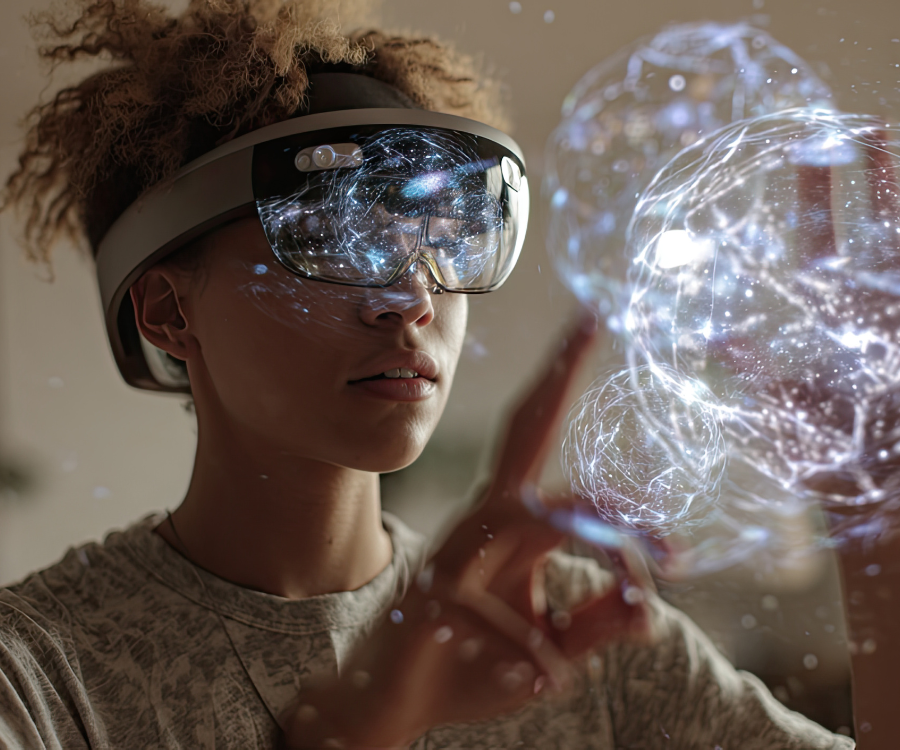
The sleek lines of the latest smart glasses models, from the Ray-Ban Metas to the XREAL One Pro, are becoming an increasingly common sight in 2025. They promise a hands-free, AI-powered future, but as this wearable tech moves from novelty to everyday device, a critical question arises: Are they safe for your eyes?

It’s a valid concern. After all, you are essentially wearing a miniature screen inches from your pupils for hours on end. Let’s look at the science, the concerns, and the ophthalmologist’s advice for maintaining your eye safety in the augmented reality era.


The Big Concern: Digital Eye Strain and the Close-Up Screen

The primary issue for your vision health isn’t the technology itself, but how your eyes interact with the screen. It boils down to a few key problems, often grouped under Digital Eye Strain (also known as Computer Vision Syndrome or CVS).

1. Vergence-Accommodation Conflict (VAC)

Many high-tech AR glasses project an image that appears far away (like a 100-inch screen) while the actual display sits very close to your eye. Your brain struggles to reconcile the perceived distance of the image (the virtual screen) with the real, close distance of the lens displaying it. This conflict can lead to:

  • Eye fatigue and aching eyes.
  • Headaches and blurred vision.
  • Difficulty focusing, particularly after long periods of use.

2. Reduced Blink Rate and Dry Eyes

When we stare intently at any screen—smartphone, PC, or smart glasses—our natural blink rate drops significantly. Blinking is crucial for coating the eye with tears. This reduced blinking, combined with the continuous display, often causes dry eyes, a common symptom reported by early smart glasses users.

3. The Blue Light Question

Like other digital devices, smart glasses emit blue light. While a small amount is natural, excessive exposure from screens, particularly at night, can disrupt the body’s sleep cycle by suppressing melatonin production. Many 2025 models, like the Ray-Ban Meta with clear lenses, now offer integrated blue light filtering technology to help mitigate this risk.


✅ Smart Glasses Manufacturers are Responding

The good news is that manufacturers are actively addressing these eye health concerns with key technological improvements:

  • Higher Refresh Rates: Many new AR displays boast high refresh rates (up to 120 Hz) and improved image stability, creating a smoother visual experience that can help reduce eye fatigue.
  • Prescription Integration: A major step forward is the widespread availability of prescription smart glasses. You can now get your required lenses (single vision, progressive, etc.) directly in popular frames, ensuring clarity and preventing you from having to wear the tech over your corrective eyewear.
  • Electrochromic Dimming: Some high-end models offer lenses that can automatically or manually dim the amount of light passing through. This helps reduce glare and improves the contrast of the overlaid digital display.

The Verdict on Eye Safety in 2025

The consensus among experts is that smart glasses are not inherently dangerous to your eyes, but they are a tool that requires responsible usage.

The biggest risk is digital eye strain from overuse and the unique challenges of the AR display. As the technology continues to evolve, manufacturers are making key improvements—like better blue light protection and prescription support—that make them safer and more comfortable for daily wear.

The key to long-term eye safety is awareness: know the symptoms of eye strain, take regular breaks, and consult with your optometrist to ensure your device is fitted with the appropriate vision correction and protective coatings.