
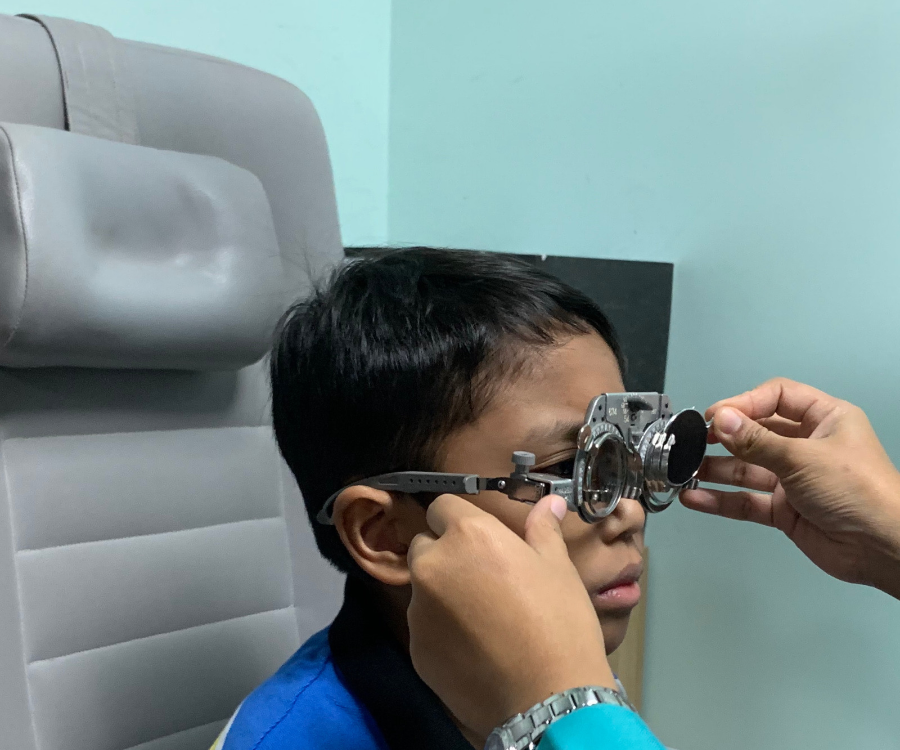
Why Every Child Should Have an Eye Test Before the School Year Starts
- Primary Keyword: child eye test before school
- Secondary Keywords: pediatric eye exam, back to school vision screening, signs of vision problems in children, pediatric optometrist, comprehensive eye exam vs vision screening
- Search Intent: Informational / Health & Parenting
- Target Audience: Parents, guardians, and educators
As the back-to-school season approaches, the annual checklist fills up fast: backpacks, notebooks, uniform fittings, sports physicals, and immunizations. Yet, one foundational preparation often slips under the radar: a comprehensive pediatric eye test.
According to visual development experts, roughly 80% of classroom learning is visual. From decoding board notes and reading textbooks to hand-eye coordination on the playground, crisp, comfortable vision is the silent engine behind academic confidence. Scheduling an eye test before the first bell rings ensures your child enters the classroom equipped to thrive, not struggle.
1. Vision Screenings at School Are Not Enough
Many parents assume their child’s vision is fine because they passed the brief vision check conducted by a school nurse or pediatrician. While these screenings are valuable community filters, they are not diagnostic exams.
| Feature | School Vision Screening | Comprehensive Eye Exam (Optometrist/Ophthalmologist) |
| Primary Focus | Distance visual acuity (Snellen chart) | Full visual system, internal eye health, neurological tracking |
| Conditions Detected | Obvious distance blur (myopia) | Astigmatism, hyperopia, binocular coordination, strabismus, amblyopia |
| Eye Teaming & Tracking | Rarely tested | Fully evaluated across reading distances |
| Ocular Health Check | None (no pupil dilation or retinal view) | Thorough evaluation of retina, optic nerve, and cornea |
A basic screening can miss up to 75% of vision disorders, particularly issues related to eye coordination, focusing endurance, and depth perception. A child can easily have “20/20” distance vision on a chart while simultaneously experiencing double vision or fatigue when reading up close.
2. Undiagnosed Vision Issues Often Masquerade as Behavioral Problems
Children rarely complain about poor vision for a simple reason: they have no point of reference. If text on a page appears blurred, doubles, or drifts, a young student assumes everyone sees the world that way.
Instead of verbalizing eye trouble, children adapt or act out. Visual discomfort frequently manifests in ways that mimic learning differences or behavioral disorders:
- Short Attention Span: Struggling to keep both eyes aligned causes rapid cognitive fatigue, leading kids to look away, fidget, or abandon assignments.
- Avoidance of Reading: Children may actively resist reading aloud or doing sustained close work because it triggers physical headaches or nausea.
- Misdiagnosis Risks: Children with binocular vision dysfunction (BVD) or convergence insufficiency are sometimes incorrectly suspected of having ADHD or dyslexia due to poor focus and letter skipping.
A pre-school eye exam acts as a diagnostic safeguard, ensuring academic struggles are not rooted in an uncorrected physiological barrier.
3. The Digital Classroom and the Rise of “Screen Myopia”
Modern classrooms are more digital than ever. Tablets, interactive whiteboards, and Chromebooks demand intense, sustained near-vision focus.
Prolonged screen time accelerates two primary concerns:
- Digital Eye Strain: Symptoms include dry eyes, rubbing, blinking spells, and tension headaches behind the brows.
- Pediatric Myopia (Nearsightedness): Global rates of myopia among children have surged significantly over the past decade. Catching early myopia progression gives eye care specialists the opportunity to implement myopia management solutions—such as specialized contact lenses, orthokeratology, or low-dose atropine drops—slowing deterioration before adulthood.
4. Subtle Signs Your Child May Have a Vision Problem
While an exam is necessary to rule out deeper issues, watching for these daily cues can help identify an underlying deficit:
- Squinting, tilting the head, or closing one eye while reading or watching television.
- Holding books, tablets, or worksheets unusually close to the face.
- Frequently losing their place or using a finger to track sentences while reading.
- Frequent complaints of headaches, eye fatigue, or dizziness in the late afternoon.
- Clumsiness, difficulty catching balls, or poor hand-eye coordination during sports.
- Reluctance to participate in detailed hobbies like drawing, puzzles, or building sets.
What Happens During a Pediatric Eye Exam?
If your child has never visited an optometrist, the idea can sound intimidating. However, pediatric exams are painless, interactive, and structured like games.
An optometrist evaluates:
- Visual Acuity: How sharp vision is at both distance and reading length.
- Binocular Vision & Alignment: How well both eyes work together as a synchronized team.
- Tracking & Saccades: The ability of the eyes to smoothly follow lines of text across a page.
- Color Vision & Depth Perception: Critical visual skills for science, geography, and sports.
- Internal & External Eye Health: Using gentle light instruments to verify that internal structures like the retina and optic nerve are developing normally.
Set Up Your Child for Academic Success
Clear sight is not a luxury; it is the fundamental sensory pathway through which children discover, read, and understand their world. Scheduling a comprehensive eye exam before the school year begins takes less than an hour, but it can redefine your child’s entire academic trajectory, confidence, and well-being.
Before the school calendar fills up with homework, practices, and tests, book an appointment with a local optometrist to ensure your student starts day one with clear, comfortable vision.
Frequently Asked Questions (FAQ)
At what age should children have their first eye test?
The American Optometric Association (AOA) recommends a child’s first eye exam between 6 and 12 months of age, followed by at least one exam between ages 3 and 5, and annually once they enter school.
Can a child have 20/20 vision and still need glasses?
Yes. 20/20 visual acuity only measures how clearly a child sees an object at 20 feet away. It does not measure eye teaming, focusing stamina, or near-point convergence—all of which are critical for reading and may require corrective or therapeutic lenses.
Does a pediatric eye exam hurt?
No. Comprehensive eye exams are non-invasive and painless. When pupil dilation drops are used, they may cause a temporary mild sting and slight light sensitivity for a few hours, but child-friendly practices make the experience comfortable and engaging.