
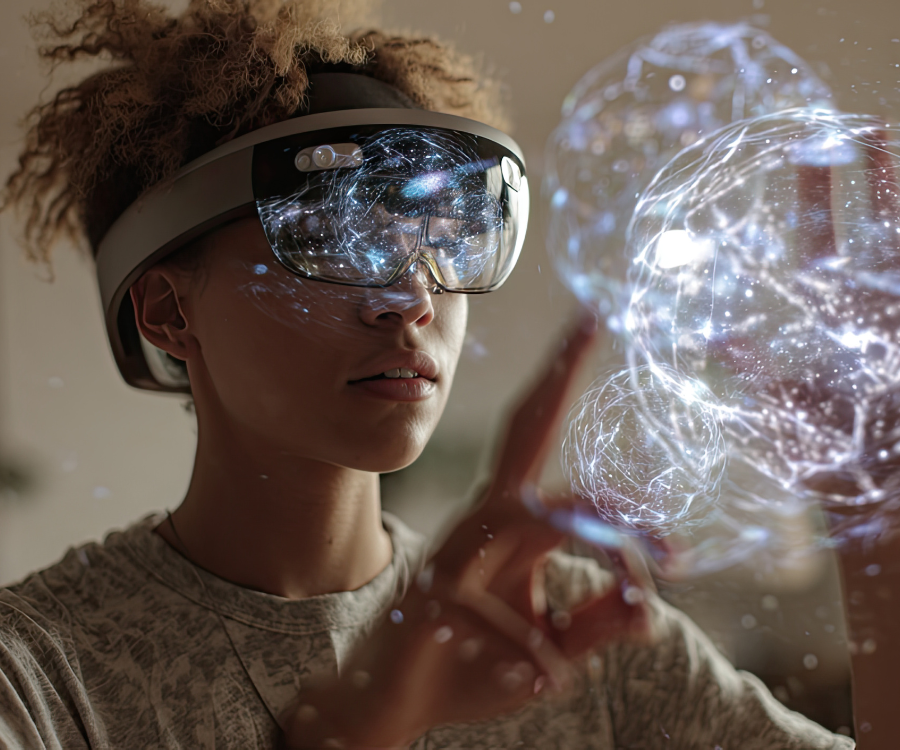
The sleek lines of the latest smart glasses models, from the Ray-Ban Metas to the XREAL One Pro, are becoming an increasingly common sight in 2025. They promise a hands-free, AI-powered future, but as this wearable tech moves from novelty to everyday device, a critical question arises: Are they safe for your eyes?
It’s a valid concern. After all, you are essentially wearing a miniature screen inches from your pupils for hours on end. Let’s look at the science, the concerns, and the ophthalmologist’s advice for maintaining your eye safety in the augmented reality era.
The Big Concern: Digital Eye Strain and the Close-Up Screen
The primary issue for your vision health isn’t the technology itself, but how your eyes interact with the screen. It boils down to a few key problems, often grouped under Digital Eye Strain (also known as Computer Vision Syndrome or CVS).
1. Vergence-Accommodation Conflict (VAC)
Many high-tech AR glasses project an image that appears far away (like a 100-inch screen) while the actual display sits very close to your eye. Your brain struggles to reconcile the perceived distance of the image (the virtual screen) with the real, close distance of the lens displaying it. This conflict can lead to:
- Eye fatigue and aching eyes.
- Headaches and blurred vision.
- Difficulty focusing, particularly after long periods of use.
2. Reduced Blink Rate and Dry Eyes
When we stare intently at any screen—smartphone, PC, or smart glasses—our natural blink rate drops significantly. Blinking is crucial for coating the eye with tears. This reduced blinking, combined with the continuous display, often causes dry eyes, a common symptom reported by early smart glasses users.
3. The Blue Light Question
Like other digital devices, smart glasses emit blue light. While a small amount is natural, excessive exposure from screens, particularly at night, can disrupt the body’s sleep cycle by suppressing melatonin production. Many 2025 models, like the Ray-Ban Meta with clear lenses, now offer integrated blue light filtering technology to help mitigate this risk.
✅ Smart Glasses Manufacturers are Responding
The good news is that manufacturers are actively addressing these eye health concerns with key technological improvements:
- Higher Refresh Rates: Many new AR displays boast high refresh rates (up to 120 Hz) and improved image stability, creating a smoother visual experience that can help reduce eye fatigue.
- Prescription Integration: A major step forward is the widespread availability of prescription smart glasses. You can now get your required lenses (single vision, progressive, etc.) directly in popular frames, ensuring clarity and preventing you from having to wear the tech over your corrective eyewear.
- Electrochromic Dimming: Some high-end models offer lenses that can automatically or manually dim the amount of light passing through. This helps reduce glare and improves the contrast of the overlaid digital display.
The Verdict on Eye Safety in 2025
The consensus among experts is that smart glasses are not inherently dangerous to your eyes, but they are a tool that requires responsible usage.
The biggest risk is digital eye strain from overuse and the unique challenges of the AR display. As the technology continues to evolve, manufacturers are making key improvements—like better blue light protection and prescription support—that make them safer and more comfortable for daily wear.
The key to long-term eye safety is awareness: know the symptoms of eye strain, take regular breaks, and consult with your optometrist to ensure your device is fitted with the appropriate vision correction and protective coatings.